What to know before you start.
Underground utilities are the things you only think about when they fail. A trench dug too shallow freezes. A line laid on rocks instead of sand fails in five years. Backfill that wasn't compacted leaves a sunken scar across the yard for decades.
Get connected with a local Grande Prairie excavation contractor who handles water service, natural gas, hydro, fibre and communication trenching. Locates called, frost depths respected and timing coordinated with the gas fitter or electrician.
- Water service lines
- Natural gas trenching
- Hydro and secondary power
- Fibre and communication
- Proper frost depth
- Sand bedding where required
- Compacted backfill
- Locates coordinated and called
What proper trenching looks like
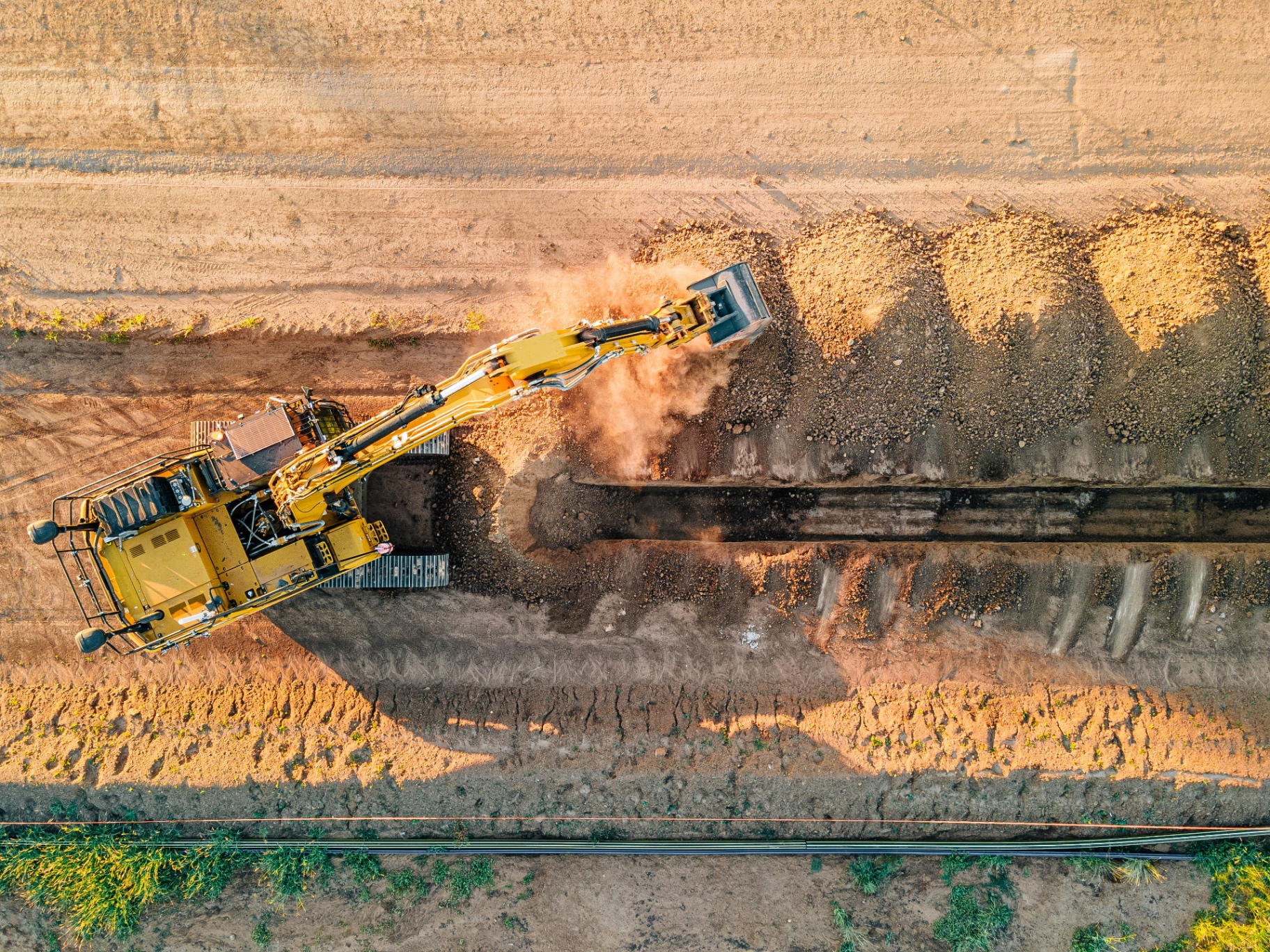
Every utility has a minimum bury depth dictated by code, frost line and what's in the line. In the Grande Prairie area, water lines go below frost (usually 8–10 feet on rural properties); gas, hydro and communication run shallower with their own rules. A good contractor digs to spec, not to whatever's easy.
Bedding matters as much as depth. Water and fibre lines sit on a sand bed so rocks don't punch through under backfill or frost movement. Backfill is placed and compacted in lifts so you don't end up with a sunken trench scar across your yard.
Coordinating with utilities and trades
Trenching usually happens at a specific stage of a build, and timing matters. The contractor coordinates with the gas fitter, electrician and water installer so the trench is open when the line is ready to go in — not three weeks before or after.
All locates are called in before digging. Hitting an existing line is one of the most expensive and dangerous things that can happen on a property, and it's almost always preventable.
Combining trenches for efficiency
Where code allows, multiple services can run in shared or parallel trenches to save money. Power and communication often share trenches with proper separation. Water and gas have stricter rules but can sometimes be coordinated to reduce total dig.
On a new acreage build, utility routes are best planned during site grading so trenching is straightforward instead of fighting the finished landscape.
Helping property owners across the Peace Country.
If your property is in Grande Prairie, Clairmont, Sexsmith, Wembley, Bezanson, Grovedale or County of Grande Prairie, you can be connected with a local excavation contractor for a free estimate.
Common questions
How deep are trenches dug?
Varies by utility and code. Water service usually 8–10 feet to stay below frost; gas and power shallower with their own rules.
Is directional drilling available?
For directional drilling under driveways or existing structures, most local crews coordinate with specialist subcontractors.
How long is a typical trench job?
Most rural service trenches are dug, lined and backfilled in 1–2 days.
Can trenching be done in winter?
Yes, but frozen ground slows things down and costs more. If timing allows, fall or spring is cheaper.
More services to explore
Free estimates from local crews for full-property development — raw land to build-ready acreage.
Learn moreGet connected with Grande Prairie contractors for level, properly drained shop pads.
Learn moreReach local crews for tree removal, brushing and mulching on acreages and rural lots.
Learn moreFree quotes from local contractors for gravel driveways with proper grade and base.
Learn more