What to know before you start.
A shop is one of the biggest investments most acreage owners make, and the pad it sits on decides whether the doors close ten years from now and whether concrete cracks the first winter. Get connected with a local Grande Prairie excavation contractor who can quote your pad — residential garage, post-frame shop or full commercial build.
Most shop-pad failures come from three things: not enough topsoil stripped, the wrong fill or compaction, and grading that pools water against the building. A good local crew is aggressive about all three.
- Full topsoil and organic strip
- Engineered fill (pit-run, road crush)
- Compaction in proper lifts
- Crowned and graded for drainage
- Geotextile fabric where soils require
- Built to your shop builder's spec
- Ready for concrete or screw piles
- Coordinated with your build timeline
What goes into a proper shop pad
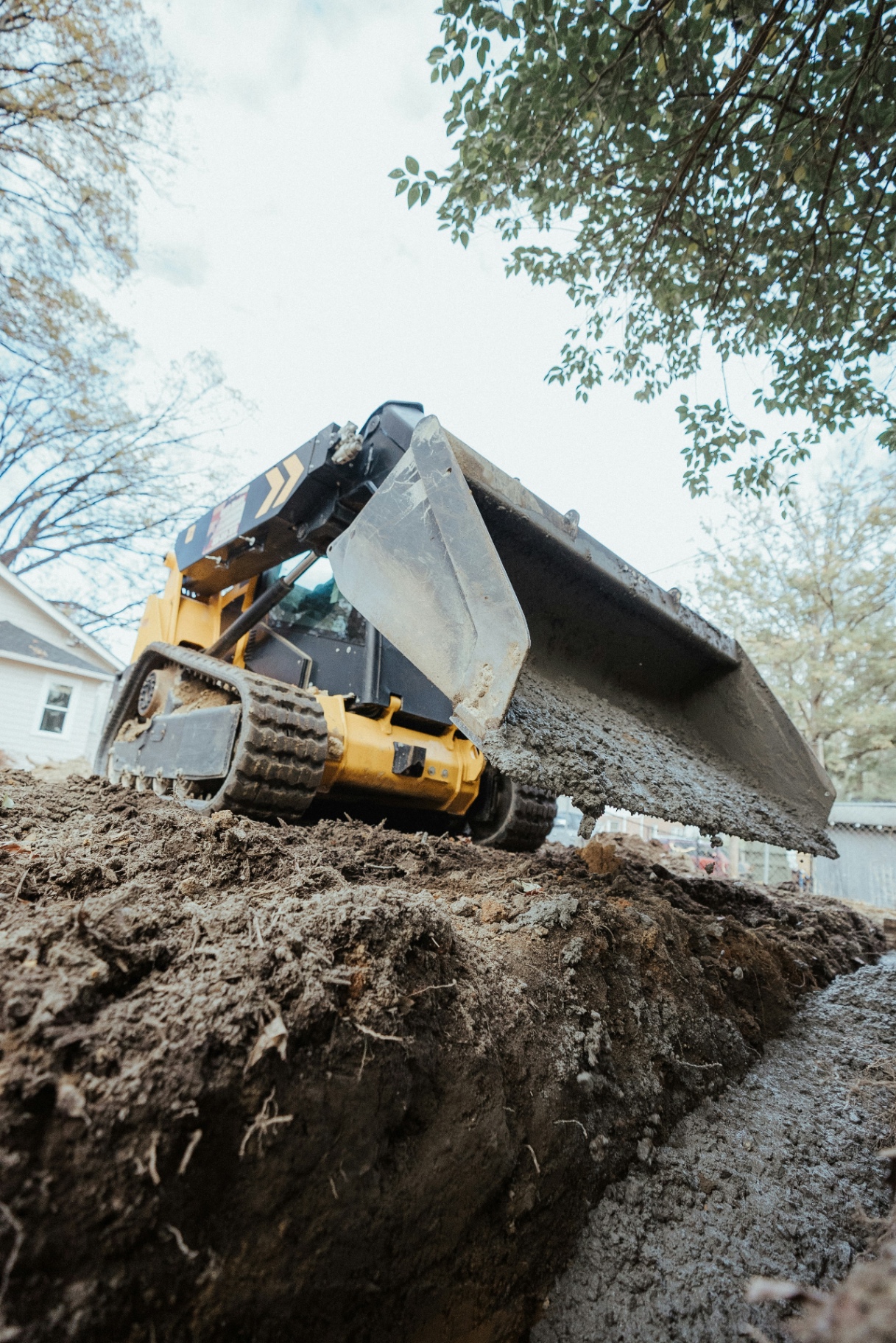
A good shop pad starts with removing every bit of topsoil and organic material under the footprint, plus a generous margin around the perimeter. Organics rot, compress and create soft spots — putting concrete or steel on top of them is how floors crack and doors rack a few years in.
Local crews bring in pit-run as base, compact it in 6–8 inch lifts, and top with road crush graded to the builder's elevation. The pad is crowned slightly so water sheds, and the surrounding ground is shaped to carry runoff away from the building.
Sizing the pad for your shop and beyond
The pad shouldn't end at the building's footprint. Extending the engineered base out for door aprons, future cold-storage lean-tos and turnaround room is far cheaper up front than tearing things up later.
On the heavy clay common around Clairmont, Sexsmith and Bezanson, a geotextile fabric layer between subgrade and pit-run keeps the clay from migrating up into the base and turning the pad spongy after a wet fall.
Working with your shop builder
Post-frame, stick-frame on a slab, screw piles or a poured foundation — local excavation contractors coordinate elevation and tolerances directly with your shop builder, and most have worked with the major shop builders in the Grande Prairie area.
Building the pad in stages — rough pad in fall to settle over winter, final grade and gravel in spring before concrete — is often the difference between a flat floor and a floor you can feel walking across.
Helping property owners across the Peace Country.
If your property is in Grande Prairie, Clairmont, Sexsmith, Wembley, Bezanson, Grovedale or County of Grande Prairie, you can be connected with a local excavation contractor for a free estimate.
Common questions
How thick should a shop pad be?
Typically 18–36 inches of engineered fill depending on soil, building size and frost considerations. The contractor will spec yours based on the site.
How long does shop pad excavation take?
Most shop pads are excavated, filled, compacted and graded in 2–4 working days, weather permitting.
Should I build my pad in fall and let it settle?
Often yes, for pads on heavier clay. A winter of settling reduces differential movement under concrete.
How much does a shop pad cost in Grande Prairie?
As a general example, residential pads often fall in the $6,000–$25,000 range, while larger commercial or post-frame shops can run $20,000–$60,000+. Every project is different — final pricing depends on site conditions, fill depth, soil and the contractor selected. The figures shown are examples only, not fixed quotes.
More services to explore
Free estimates from local crews for full-property development — raw land to build-ready acreage.
Learn moreReach local crews for tree removal, brushing and mulching on acreages and rural lots.
Learn moreFree quotes from local contractors for gravel driveways with proper grade and base.
Learn moreFind local installers for tank, field and mound systems on rural homes and acreages.
Learn more